Friday, 30 April 2010

Liverpool Comedy Festival Preview - Part 1


THE opening two nights of Liverpool’s 2010 Comedy Festival have one of the finest arrays of comics the city must have ever hosted with big names scattered across the arena, theatres and clubs.
On Thursday, John Bishop (above) kicks the big gigs off with a 5,000 seat sell-out ECHO Arena show which just illustrates how a year is a very long time in comedy.
In an interview with Catherine Jones in today's ECHO he explains how he has gone from selling out the 250 seater Unity Theatre last year to selling out the Arena this time around.
At the same time Chris Cairns and Keith Carter debut their specially written one off one hour shows at the Slaughterhouse. Cairns is doing ‘The A-Z of B Movies’ (interview here, Tuesday) about a life watching rank bad films while Carter is bringing his scallydelic musician alter ego Nige back for a musical evening of songs from the stoner King of Park Road’s new album ‘Dark Side of the Meff’. (Interview here Wednesday)
Daniel Kitson, held by many as the best stand-up working in Britain today brings his new one man theatre show ‘66a Church Road – A Lament Made of Memories and Kept Suitcases’ to the Everyman for a week. It’s a clever, literate story of nostalgia and life gone by told from a series of battered suitcases.
But in each of the five main weekly clubs that the city now boasts, there is an absolute welter of quality acts. At Comedy Central at Baby Blue on Thursday the brilliant Paul Sinha headlines while at Rawhide downstairs in the Royal Court, Paul Tonkinson is the headliner. They are both quality acts.
While the clubs normally have some of the best bills anywhere in the country most weeks, next Friday they have really upped their game for the festival.
Promoter Tongue in Cheek Comedy’s three clubs lead the way. At their flagship club in the Slaughterhouse, regular compere Neil Fitzmaurice (Phoenix Nights and Peep Show) welcomes charismatic Canadian Tom Stade who has gone through somewhat of a career renaissance recently.
At their second night at the Slug and Lettuce, TiC have Ste Porter compering the brilliant surrealists Mundo Jazz and Seymour Mace and having taken over Comedy Hell at Lenny’s Bar and Grill the brilliant Nick Revell and Adam Bloom pop in.
At this stage it's not clear whether Mundo is going to be doing his Liverpool inspired hit  'Scally Scally Scouse' but hopefully he will be doing the his touching cri de ceour for racial integration 'Peace Song'.
 
Rawhide, with more than a decade of putting on brilliant shows is, as ever, a study in comedy club booking excellence. Paul Tonkinson returns for a second night while the glamourous Jonathon Mayor joins him.
At Comedy Central,  Paul Sinha stays on for another night, and is joined by Kevin Hayes and the ever brilliant and energetic Simon Bligh. All bills remain for Saturday.
In an exclusive text message he cut and pasted from the press release, Festival marketing director Iain Christie said: "The Festival comes around so quickly every year and we can't wait to get into this one, With 75 shows in 10 days you won't be able to move for funny stuff wherever you are in the city."
You’ll not get a ticket for Bish at the Arena so get out and see some high quality comedy at often bargain basement prices.

My night with Stuart Maconie


A YOUNG man pitched up at Edge Hill College in Ormskirk in 1979 with the trifecta of cultural high points of the 80s, leggings, David Hasselhoff and Haircut 100 a heartbeat away but as yet unimagined.
Within seven years he was to see one of the first gigs by The Smiths and be rescued from a life teaching English and Sociology at Skelmersdale College by the NME which whisked him around the world interviewing independent music’s luminaries, including INXS.
Stuart Maconie returned tonight to Edge Hill to help celebrate the now university’s 125th anniversary for a thoroughly enjoyable lecture. It was essentially a pimped-up reading session by one of Britain’s biggest selling travel writers, but no less entertaining for it.
Interspersing a hitherto unseen talent for stand-up style raconteurship with reading extracts from his three books, ‘Cider With Roadies', ‘Pies & Prejudice’ and ‘Adventures on the High Teas,’ he affectionately recounted his life as a student and then indulged in the deep love of England which has been the focus of his literary output.
There’s no ‘Big I Am’ about Maconie, a writer and broadcaster of some considerable stature, he has a lovely problem with the definitions of his work. As he said, although ‘Cider with...’ is stacked in autobiography he had to move it back in a shop recently because he was ashamed it was shelved alphabetically beside Nelson Mandela’s.
Likewise being called a travel writer perhaps overplays him, somewhat, he says: “Bruce Parry chops bits of his own body off and is constantly drinking hallucinogenic potions and falling into comas, I go to chippies.” Nor does he write the kind of books he brilliantly typified as ‘To Azerbijan in a Cement Mixer.’
Maconie, as befitting a man whose favourite gig is still The Smiths at Edge Hill Students’ Union in 1983, is in love with the nostalgic and unthreatening minutiae of British life. He loves half day closing, regional foodstuffs and deeply held love of place and people.
His patriotism is not that of bigotry and slagging off immigrants, his Englishness is one of civic pride and love of people and place. Recounting a phone call from his mum during his first week as a freelancer after leaving the NME, when she asked what he had done, he told her he had written a piece for the Observer, “What, the Wigan Observer?” she proudly inquired.
The kind of love of ‘nostalgic’ Britain, which inspired him to help invent those still de rigeur ‘I Love the...’ talking heads TV shows, allows him to shine a light into England of recent past and say much about what he sees wrong with that of the present.
He loves Britain’s invention of the railway, old public information films, Celia Johnson and Marmite. As he told a café waitress in Burton Upon Trent ‘an uncooked spaghetti stick dipped in Marmite makes a great emergency Twiglet.’
But, he is fully aware of the fact that the Englands of the past he so loves have a different resonance in the modern world. While the first Joy Division album, he says, sounded like Manchester of 1978 - of tyres under rainy overpasses and dodgy lifts in Hulme high rises - Manchester has changed, now it’s all skinny de-caff lattes and loft apartments.
For Maconie, Englishness is Orwell and the non-jingoistic Kipling. It’s the Wigan Casino Northern Soul club and The Smiths and Echo and the Bunnymen and Radiohead, it's Nick Drake and Pink Floyd.
Most beautifully, England for Maconie, is the romantic but ultimately tragic moment of English summertime elementally captured by Edward Thomas in the poem ‘Adlestrop,’
‘And for that minute a blackbird sang
Close by, and round him, mistier,
Farther and farther, all the birds
Of Oxfordshire and Gloucestershire.’
Thomas would die soon after in World War One.
For Maconie, these artists’ England is wistful, elegiac and ‘mustn’t grumble'. Today's Britain, he says, might benefit from a slice of the stoic, pent-up melancholia of Celia Johnson in ‘Brief Enounter'.
Even as an Irishman, Blake’s ‘Jerusalem’ soared in my heart - the Billy Bragg version, mind.

Thursday, 29 April 2010

Jimmy Fennessy rocks: Great Joe Strummer street art


THANKS to my mate Jimmy Fennessy for this great pic from New York City of Joe Strummer street art. He took it on the south side of Thompkins Square Park on the corner of Avenue A and 3rd Street. I wish there were more murals of this kind in Northern Ireland.

Wednesday, 28 April 2010

Lenny Bruce documentary in narrator #EPICFAIL

WHEN you are doing a documentary about the hippest of hep cats like Lenny Bruce, I think you need a narrator to match the hard hitting script. Maybe Christopher Walken or Dr John or someone who doesn't sound like they have come off the set of BBC1's Doctors or Antiques Roadshow.
I think, with that in mind, this is, in the words of modern social networking, an #EPICFAIL.
So who else would be a bad narrator of the Lenny Bruce story? Comments below, please.

Saturday, 24 April 2010

Clash Week: In Their Own Words

I'LL LET this wee audio package to speak for itself. Topper, Joe, Mick and Paul as they saw it. From the great Rockers Galore CD sampler.
Right click on the DivShare logo on the listening bar and download the package to listen to again on your iPods, mp3 players or wherever.

Thursday, 22 April 2010

It really did all sound the same

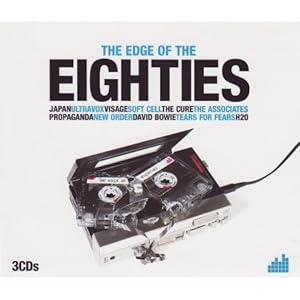
The Edge of the EightiesI HAVE been listening to this album this week and was struck that a) most of the Chew Lips style new stuff sounds like late 1970s early 1980s electro bands I stupidly ignored and b) may be the rockists were right, it did all sound the same, originally.
This double bill from OMD and Our Daughter's Wedding shows extraordinarily similar thinking from each band. OMD's came first, that's all I am saying.
It's a tremendous album with some tracks I had never heard of (Telex  Moskow Diskow anyone? Brilliant) and which have bridged the generation gap between Mrs GM (undisclosed) and Miss GM (9).


Play it for that motherf***ing money, boys: First thoughts on Treme


TREME, the new  HBO show from The Wire's creator David Simon has all the hall marks of one he intends to run and run.
Produced by Simon and Eric Overmyer it is set three months after Hurricane Katrina in the predominantly black neighbourhood of Treme which sits behind the French Quarter in New Orleans, a traditional home for the musicians and Creole community.
After the first couple of episodes those of us familiar with the greatest TV show ever will notice similar narrative and character hints being dropped slowly into a heady gumbo of a drama. Not much of major dramatic impact has happened in the first two episodes, but another large cast of characters has been introduced and plots and themes are emerging tentatively.
Signed up for at least two series by HBO, the experienced among us will know it may take all that time for everything to be tied up, by which stage series three will be taking on another set of injustices.
I'd say this series is going to deal with the institutionally racist neglect of flood victims, the deadly stasis brought on by Federal bureaucracy and the inherently corrupt political systems which allowed the huge humanitarian disaster to unfold down in N'awlins.
One thing already apparent is there's a tremendous cast working their socks off. The Corner and CSI Miami's Khandi Alexander is stressed bar owner LaDonna Batiste-Williams looking for her brother missing in the prison system, Clarke 'Lester Freamon' Peters is the Indian chief Albert Lambreaux looking to get his carnival gang back together, Wendell 'Bunk Moreland' Pierce (above) LaDonna's gifted but priapic trombonist ex-husband Antoine Batiste hustling for work while Steve Zahn plays the middle class white musician and DJ Davis McAlary in love with black music, its musicians and culture.
However, the stand-out character, and perhaps the moral barometer of the show, is English Literature professor Creighton Bernette played by  John Goodman, a man leading a crusade to get the truth about Katrina known. It's not a natural disaster he says, 'but a federal fuck-up of epic proportions, decades in the making.'
The music is incredible, in what has to be one of the best opening sequences of any TV show, a panorama of the city's heritage from ragtime to revival, be bop, rock and dirty south hip hop all comes together before concluding with a full New Orleans jazz band marching the streets of Treme.
British and Irish gobshites, content yourself with this trailer and others like it on YouTube - as yet there are no dates for either a  screening or DVD release in these parts.
 

Guns of Brixton: Paul Simonon the beating heart of The Clash

GUNS OF Brixton could be the very zenith of the kind of 'wiggerism' many Clash critics point to in their criticisms of the band, and perhaps rightly so.
Bass player Paul Simonon gets a chance to live his roots reggae dreams of outlawism in a cod Jamaican accent while telling a story of police lifting a bandito in the far off flung climes of Brixton.
Well, it may be flawed, but 'Guns of Brixton' has an awe inspiring bass line, some great guitar fills from Jonesy and the vocal is spot on from Simonon.
And the composer is the heart of this debate: there really hasn't been a cooler wielder of the four string rhythm section axe in history than Simonon (right).
I reviewed him in the overblown and overhyped Albarn-helmed four piece The Good, The Bad and The Queen and even 30 years on the man was the essence of rock and roll cool.
And this song has haunting harmonies, is underrated and wsn't even spoiled by the fey shit sandwich that is the Nouvelle Vague cover.

Wednesday, 21 April 2010

Beware the propaganda: Rock the Casbah

THIS  interview with Strummage would lead you to believe he was the driving force behind 'Rock the Casbah', The Clash's most successful single, but don't be fooled - it's all about multi-talented drummer Topper Headon(left).
1) The original interview I am using was done while Headon was still suffering from the effects of heroin dependency and he had no chance to give his side of the story. He has since got clean and the record been set straight.
2) Strummage, like the rest of The Clash entourage, love the process of myth making, especially while recording sound bites for American radio and especially when needing to promote something. Disappeared front man anyone?  
3) Bar the bloody lyric and a few guitar fills, Topper had written the most successful song the bastards ever recorded.
At least the story has a happy ending - some time ago it was decided the royalties were to be split four ways and there is no rancour among the Last Gang in Town, it's still a great song.
It's still Topper's song despite what Joe says below.

The true sound of the suburbs: Lost in the Supermarket

THE STORY goes that during the Rehearsals Rehearsals years of the early Clash, their first manager Bernie Rhodes urged them to write about their lives, not about America or love songs or the kind of ephemeral stuff that many pop songs were about, but to reflect the often manufactured gritty realism that punk was supposed to have heralded.
So, in the mythology created by the Last Gang in Town,  Strummer, Jones and Simonon adjourned to Jones' nan's 18th floor flat in Wilmcote House high above the Westway motorway flyover in Notting Hill in West London, looked over the tiny balcony (above) and resolved to write about life as it affected them.
It took another two and half years before they found the highest point of their writing about their own lives.
To my mind, the highest point of The Clash as songwriters is 'Lost in the Supermarket' from the London Calling album, a song which almost poignantly pinpoints the alienation many of us in suburbs can feel at various points of our life.
It's easy to forget that in the 1970s the big supermarkets that have become a fabric of our lives were a relatively new concept and that life in high rises and housing estates had been heralded as a new utopian example of communal living paradise by modernist architects only in the two decades before. The terrible reality of the latter lie would only become apparent in the 1980s and 90s.
Mick Jones, Strummer too, often get stick for not being great singers, unfairly in my opinion, but I really love Jones' vocal on 'Supermarket.' It's febrile and light and worthy of the insecurity of the narrator created by  Strummer in his lyric.
And one line is the best: 'I got my giant hits discotheque album/ I empty a bottle, I feel a bit free.' It says it all about getting your kicks where you can when you are feeling lost in whatever isolated reality you are living.
Over to you Mick and Joe...

Monday, 19 April 2010

Turning rebellion into money: White Man in Hammersmith Palais


OF ALL the nonsense that is often thrown at The Clash, the most common criticism is that they were opportunist arrivistes always flying to Belfast for photo ops and using DM shod, biker jacketed revolutionary chic to sex up their meat-and-two veg rockism.
But that kind of cynical critique doesn't allow for the likes of myself who will be forever in their debt for opening my eyes to a legion of great music that I wouldn't ordinarily have heard of. They were a music library waiting to be explored, because unlike many, they always wore their influences on their sleeves - sometimes literally.
Guitarist Mick Jones once described their fabulously eclectic album fourth album Sandinista as 'music for people who work on oil rigs,  a bit of everything,' but I have always seen The Clash as a practical equivalent of those long lists of artists you got in the credits of Def Jam rap records: after listening to The Clash, I had to search out Prince Far I or Culture or Ken Booth or Vince Taylor.
It was more than just music. Through The Clash, I went and read about movie star Montomery Clift (from The Right Profile from London Calling) and photojournalist Sean Flynn (from Combat Rock). (He worked with John Steinbeck's son).    
On Thursday last, I was struggling with a mountain of work and fired on Under Heavy Manners by Prince Far I, you think I would have known about that 20 years ago living in a new town of roundabouts and little else without The Clash? Possibly, but it was thanks to interviews with them that I did.
The Clash back catalogue is like the big revolving racks of tapes that were in Craigavon library when I was an awkward, mostly friendless teenager stuck in his room. I got The Clash from those racks and those racks contained a lot of the music The Clash lionised and covered and I also listened to that.
The Clash, unlike a lot of commercially successful bands had the ability to make other worldly sounding music, stuff a band in their position would usually not make and 'White Man in Hammersmith Palais' is perhaps the best example. A reggae tinged story of being an outsider in a black venue, not the stuff of  zeitgeisty, successful figureheads of British punk in 1978.
And that's the point: it is Joe Strummer's story of being an outsider during an evening of the black culture they so loved. It's about people and love and enthusiasm before turning to pointing a finger at the cynical pricks who make life bad.
It also has the best 'Oooh A hooo A oooh' harmonies ever committed to tape. That might be the best thng about it, too.
Listen to the interviews below from Joe and Mick to tell the story.
(I'll hypertext this up soon)


Sunday, 18 April 2010

Clash Week: Let's take humanity back into the centre of the ring

THIS WEEK I will be posting pieces inspired by interviews recorded by members of  The Clash during the production of the wonderful Don Letts' documentary 'From Westway to the World'.
I've been lucky enough to get an audio CD sent out to US radio stations for promotional use after the re-release of the box set 'The Clash on Broadway' near the end  of the 1990s. Much thanks has to be given to my Widnesian mate Tony Dagnall who snaffled said CD in Ed McKay's, the record and book shop he works for in Winston Salem, North Carolina.
The CD looks like it has been sold by someone attached to college radio station of Wake Forest University in Winston Salem.
At the end of the day, humanity is what The Clash, and particularly Joe Strummer, means to me.
Ed Hamell, the one man acoustic guitar wielding colossus, got it right many years ago in his Uncut magazine column when he said anyone who attacks the Clash for posturing or selling out misses the essential humanity at the heart of the majority of their greatest songs.
Joe's spiel here says it all for me, I'll be posting my thoughts and some more interviews for the next seven days.

Thursday, 1 April 2010

Libertines and the rule of diminishing music industry returns

PETER Guy hit the nail firmly on the head with this sensationally well written demolition of The Libertines in the wake of news that they are to reform for a festival this summer for a monster fee not unadjacent to 1.5m of your British pounds.
Not bad for two nights work which will work out at about 120 minutes in total stage time. I can't imagine they will overburden themselves with intensive rehearsal to get ultra tight - it was never a concern in the first place.
Central to Pete's thesis is that the cult of The Libertines/ Pete Doherty was based on a slavering music press sycophancy which needed to rapidly create new heroes but which ultimately opened the door for eight years of terrible guitar bands which have failed to light up anything, let alone what passes for charts now.
The continual glut of uninspiring indie guitar bands which still routinely appear to steal time which we, as eternally interested but perennially underwhelmed consumers, will never get back, come directly from the time in which The Libertines emerged.
It was a period of plunging music sales and dwindling music paper circulations in which A&R men and music journalists fantastically sought to battle these twin perils by trying to recreate the last, in every sense of the word, glory time for each industry - Britpop.
So the A&R men headed down Camden way or Old Street or got themselves off to the gritty North in search of some slim hipped rapscallions, but not before gathering up the vintage Epiphone guitars, picked a football team for each band (if they didn't have one), got the Fred Perry polo shirt/ tight jeans/ vintage parka look bang on, signed up the likeliest crews and sent the boys (always boys) out to misbehave just like Noel and Liam had done.
The boated music PR industry, seeing the devastation among the major and big indie labels and the potential losses from their dwindling coffers, got to work polishing a bewildering series of turds.
At the same time, music journalists (myself included) forced to file columns on a daily or weekly basis on the thinnest of new gruel were, at best, forced to acquiesce and cover that which we knew as cack, or, at worst, actually blindly became trumpet majors for a period of utter dross in a bid to cut a diminishing niche in this new media ecosphere of plenty.
It was the hoariest of music industry clusterfucks - no-one wanted to put their heads above the parapets and say that which was going to bring down the bright red beach ball of fun which we all needed to keep floating.
But, it was a singularly depressing time where anyone with any recent historical frame of reference could see all the old joins being imperfectly glued back together by desperate people.
Mod/ Britpop stylings, cool punk/ post punk producers (Andy Gill/ Mick Jones), Union Jacks and Victoriana were utilised to give a communion wafer thin concoction some sense of timelessness and history in the hope that it would not disappear with the same rapidity of the average communion wafer.
The new fads of the internet were also utilised to give this old stew some new seasoning: bands did 'guerilla' gigs arranged on the internet and other acts were signed due to live shows streamed on the emerging phenomenon of mySpace. 'OOOH, look.' we cried, 'Sandy Thom and the Arctic Monkeys were signed due to the new self empowering and utterly democratic spaces of social media.What a story to kick their careers off with.' Mind, we didn't call it social media until much later.
The Libertines held impromptu gigs in whatever needle strewn, shite and blood stained hovel they were inhabiting and there was always a phalanx of journalists and hand held camera 'documentarians' to capture the bohemia for NME TV or BBC3 or whatever. With more channels and new demographics emerging there was always a home for this stuff.
In Liverpool, the Deltasonic label made an absolute virtue out of a post modern retread necessity by simply taking youngsters and telling them what they would sound and look like. The Coral were an identikit scally stoner act, The Zutons a rockier version, The Little Flames a bit the same with a good looking girl singer and The Dead 60s were a former hard core four piece turned into a reggae tinged Clash-a-like who were ultimately upstaged by one single wonder Southerners Hard-Fi.
It really was depressing to see most of them lauded and more pertinently, to be involved, partially, in the lauding.  
I remember one gang of big indie label chancers called The Others who were sold to me by a PR as a potential big thing. The were the apotheosis of this generation's mediocrity: an identikit shower of cack put together like a self-assembly IKEA band - a good looking young fella who resembled Lee Mavers and three session musicians - one of whom looked like a fat member of The Cure. They were dreadful and even for the weekly £60 from the Daily Post, I wouldn't polish the aforementioned doggie waste product.
The saddest thing is that, Arctic Monkeys aside, it's still going on. The Courteeners are at best derivative but more realistically plain bad. Scouting for Girls, Kaiser Chiefs, The Music et al continue to get a few moments in the spotlight thanks to a supposed primacy of indie guitar bands in both Britain and its music press.
The reformation of the Libertines in July or August will hide, momentarily, one simple fact: we need no more British indie guitar bands because that seam has been mined to extinction and we need no more of them.
If we had stopped and looked in 2002-2005 that would have been wholly apparent and we would have saved ourselves a pile of time in the process.

Wednesday, 31 March 2010

The Wire and modern journalism

I wrote this piece for Jason Walsh's brilliant magazine Forth.ie. It is an update on one started here some months ago on The Wire and what it says about modern newspapers and journalism.
I will update it again very soon as I am hoping to publish a piece in an academic journal about the subject.

It's not rubbish - it's just you don't like it

I posted this on The Word Magazine blog enraged at people (as we used to say in local newspapers) 'slamming' The Clash's 'London Calling' and Captain Beefheart's Trout Mask Replica'. I love the first and don't care for the latter but respect most equally for their enduring appeal to people.
I now think that most attacks on popular canonical works in most art forms are almost pointless. Re-appraisals, particularly by those who don't like them, tend to be sarcastic, catty and nit picking where simply the words: 'I don't like it,' would suffice.
I stand by the core of this post: just because you don't like it doesn't make it shit.


'Amid the welter of re-appraisals of classic albums as 'not very good' or 'total abortions' that have become de riguer around these parts in recent days, I was reminded by something the oul fella said to me nearly 25 years ago.
As he was praising Ralph McTell to hilt in a bid to get me to expand my horizons from whatever narrow passing indie trend I was into at time, he was met with a volley of abuse about the Tickle on the Tum hitmaker.
His reply was perfect: "Just because you don't like it doesn't mean it's rubbish." And, much though I hated to agree with him then as now, he was right.
On any scale of success, either sales or critical/ fan approval, 'London Calling' and 'Trout Mask Replica' among others, are great albums. They live beyond their times because they have an enduring appeal which allows them to transcend the contemporary.
Just because you don't care for them doesn't make them bad.
And anyway, the reappraisal of the 'canon' in any art form almost inevitably leads to diametrically opposed verdicts than those originally given. And, it's almost always pointless posturing.'

What have you heard/ read/ seen this month?

AGAIN, stolen shamelessly from The Word magazine's Blogger Takeover strand, I'm asking fellow gobshites to tell me what they have read/ seen/ heard this month. Here are mine for March 2010.

Books
City of Lies by Alafair Burke – while it has a couple of nicely drawn characters, a nicely convoluted plot which makes you think almost to the end, Burke’s New York-set police whodunit doesn’t sit in the top league of modern crime thrillers. The absurdly strong and wilful detective Ellie Hatcher has the potential to be a great character and the backdrop of Manhattan and NYC is lovingly painted, but it lacks a the stylistic oomph of New York crime scribe Lawrence Block (skip annoying intro to site) and the moral overtones of either Burke’s father – the great James Lee or the holy trinity of modern East Coast American Noir: Lehane, Pelecanos and Price (see tags on the left).
It’s one for those of us who can happily fly through Jonathan Kellerman or Robert Crais.

This book is 10 years old this year and still is as relevant to the modern communications student/ researcher. Amid all the middle class fortune telling of those predicting the future with absolute confidence on the welter of blogs established by self appointed experts, this is a valuable reminder that we have as yet to do extensive research into the power of the blogosphere beyond a couple of books and peer reviewed journal articles.  

Six years old and a similar story to Entman and Bennett’s collection – a book which charts the first wave of impact on corporate or big media by the internet and blogs and which shows we have yet to write the key text on the second wave. Perhaps only Charlie Beckett’s work is leading the way, in Britain at least. 

Films
Precious little at the cinema but a splurge on Amazon for stuff that I wanted to see again.
First up was Matteo Garrone’s wonderful Gomorrah (2008) which shows the brutal and all pervasive depths to which the mafia permeate life in Southern Italy. From nonsensical drug turf wars which needlessly cost lives, to the all too often seen ‘innocent boy to drug mule’ motif (known to lovers of The Wire) to the white collar political criminals in the pay of the mob, it is the best film on mafia ever made. Award winning writer Roberto Saviano, on whose book the film is based, is now in hiding and his exposure of the true nature of Italian society should be potentially explosive. It also has a breathtaking opening sequence which sets the scene for the rest of the movie. To call it the best film since City of God, does neither film any justice. Gomorrah is really compelling. The final lines of this Amazon review should tell you all you need to know about why this is a vital piece of film making and journalism.

Next up the two part French crime double Mesrine which I saw at FACT in Liverpool. Directed by Jean-Francois Richet and featuring (and I use this phrase with the respect it deserves) a career defining performance from Vincent Cassel, it is the real life story of 60s/70s French gangster Jacques Mesrine. It has to be said that Cassel, a man good looking enough to test my Kelner-like 36 year unblemished record of heterosexuality, gives the performance of a lifetime. Breathtaking violence, glamour, daring escapes, heists, gambling, shagging and media manipulation - it is the perfect example of an intoxicatingly true story told well by a fine director and a leading man with huge charisma.

Tomorrow night, I’m going to go with a 1974 paranoia-fest double bill with Francis Ford Coppola’s The Conversation and Alan J. Pakula’s The Parallax View because I think both movies say so much more today than they even did in their own times.

Music
Man alive, I have gone mad with all manner of genres in the last few weeks of frenzied PhD  catch-up writing. Amadou and Mariam for the last couple of days – anything with such a noticeable influence of the producer Manu Chao has to be a good thing.
Reggae star George Faith, particularly his work with Lee Scratch Perry, turned up during a Word magazine instigated randomiser session as did the Nigerian-born ‘calypso’ star Ambrose Campbell whose work features on the now several years old ‘London is the Place for Me’ compilation I found thanks to Du Noyer and The Word. Campbell's very interesting obit from the Guardian is available here.
On top this, while writing I have found my inner classicist and have again been top skanking to Daniel Barenboim’s conducting the Berlin Philharmonic doing Bruckner.
At times of minor crisis, I always turn to (among others) Lightning Hopkins, Trojan Rocksteady, The Pogues and The Clash and this period has been no different. Enough hypertext already, if you need to know - google people.
Let me know what you have watched/ read/ heard this month, below the fold.


Friday, 12 March 2010

Live streaming

Sunday, 7 March 2010

Flashback: Oscars coverage

I FILED this piece for the Liverpool ECHO TV column on March 25, 2002. It was written hurriedly after having been in the esteemed Crosby pub The Edinburgh the evening before with my mate Cormac Austin who had been visiting from Belfast.
When I say hurriedly, I mean (to use film parlance) it was one take right on deadline - in the old days a copy boy would have ripped it from the typewriter and ran like stink to the compositors rubbing sweat from his visor.
No rewrites and no self-analysis and still the favourite thing I ever wrote there because the emotions will be similar to those watching tonight's schmooze fest. It shows that sometimes it's better just to write what you think and be damned.

Oscar Special (BBC News 24) 
OKAY, okay, its not officially last night's telly, but the early-morning Oscar coverage from LA got the hatred meter rising through the roof.
As the nation slept and young parents like me were blearily calming down hyper-active weeuns, the biggest shower of over-paid prima-donnas were praising and analysing more prima donnas giving wee gold statues to other more highly paid prima-donnas.
So as billions of dollars were wasted on analysing the classic simplicity of Sharon Stone's dress, I was screaming at the telly: 'Of course she looks good, she gets paid $20m a movie, she's got people employed to make her look good.' 

Then we were told it was a great night for the African-American actors; it was a triumph of the great American dream. Did Martin Luther King die just so we could get the chance to see Halle Berry ham it up like the hammiest pantomime dame?
'This is for all the women of colour,' she blubbed unconvincingly, while I was sat shouting 'he's behind you' and waiting for Jim Davidson to come on as Buttons and start the song.
Even Sidney Poitier came on and made the sort of fawning, luvvie-speak acceptance speech that makes you want to kick in the TV.
The roll call of puffed-up luvvies in designer dress rolled on and on and on. By this stage steam was puffing out of my ears like a big old cartoon villain.
Leave it to the Brits: At least Jim Broadbent and Julian Fellowes looked as if they saw the ludicrousness of the whole thing and just pretended to be underwhelmed for a while.
Then as the parties started after the ceremony, Rosie Millard and some mad Yank woman with a big jaw from Vogue magazine started to analyse the couture, the haircuts and the shoes. Then I blew a gasket.
I began to shout: 'There's people dying of hunger in the world. Can't you see this is wrong? That it's immoral, that it's ridiculous. Why aren't you listening to me? Are you deaf? Argggghhh?'

And then I realised that sitting shouting about world hunger to the TV in the early hours of the morning is perhaps the most ridiculous aspect of Oscar viewing. 

Wednesday, 17 February 2010

Poster Day

AS part of my PhD I have to complete a poster which advertises and explains my thesis.
Any excuse to mess about on Quark....
Poster Day 2

Monday, 15 February 2010

The Mosquito Press in the Information Age

I wrote this piece of Jason Walsh's brilliant Forth magazine

PS O’HEGARTY’s 1946 essay ‘The Mosquito Press’ in the The Bell declared that an interesting book could be written about the weekly and monthly journals which he says ‘festooned the Separatist, Sinn Féin and Irish Ireland’ movements since the days of Parnell. (1)
Much the same could be said for the modern multi-media era which has seen an explosion in new journals and websites dedicated to the cause of documenting the present and negotiating the future of republicanism in the age of the internet.
From traditional newspapers like Saoirse and An Phoblacht to magazines like Fourthwrite and The Hibernian, internet journals like The Blanket and blogs like Splintered Sunrise – it has been a golden age for Republican journalism and while this vibrant and sophisticated new media ecosphere has often slipped off the radar of the mainstream media, anyone making a concerted effort to nose around the Republican Sphere will know a more complete picture of Republicanism is available from the many and varied corners of the information super highway.
It is not in the council meetings or cummann gatherings that the next generation of Republican activists is going to come, but from the blogosphere and online media.
Mick Fealty, editor of Slugger O’Toole, esteemed political commentator and ringmaster general of the Irish political blogariat says it is interesting to note that the age of the Northern Ireland peace process has run concurrently with the age of internet and social media and that the two things may be inextricably linked (2), certainly the media in all its forms became a key terrain of political interaction from well before the signing of the Good Friday agreement.
From roots in the prison journalism of Long Kesh to the Bobby Sands Discussion Group, development in groups like the Irish Republican Writers Group and Fourthwrite through to the myriad of blogs, websites and YouTube Channels, a new republicanism has flourished in the modern age and provided a challenge to the official narratives of Sinn Féin.

Republicanism & journalism
My own interest in the Republican media sphere was first piqued as I started out three years ago on a part time PhD looking at the Framing of republicans in the media in the post-GFA era. With Holy Cross, the Northern Bank Robbery and the murder of Robert McCartney all fresh in the memory, I felt republicanism was at an interesting place in its own timeline and that for the first time in its modern history, it had some modicum of control in its relationships with the media. From the vantage point of Liverpool and a career in journalism, it appeared to me that with every day Sinn Féin’s journey from political pariahs to mainstream political players (3) represented a kind of political and media miracle those of us reading Liz Curtis in the 1990s could not have foretold.
It is also interesting to note that at the height of Sinn Féin’s 32 County Political arc (before Northern Bank and McCartney) and in the midst of this explosion in writing and comment, the Belfast Media Group thought it intellectually sustainable and economically viable to launch Daily Ireland at this time. It had many critics, but it did at least aim to give a voice to the many strands of republicanism.
However, the more I read the mainstream media the less I became interested in ‘Official Provisionalism’, with its attendant New Labour style affectations. Actually, that is terribly unfair to Sinn Féin which had barely put a foot wrong and which had embraced the possibilities of the internet and social media before other political parties – An Phoblacht was the first Irish Newspaper on the net.
Rather it was the ever developing sphere of Republican dissent that fascinated me - not the hammer throwers concerned with revisiting the tired rhetoric of armed struggle and the good old days of a triumphalist reading of War News in the Phoblacht. No, it was magazines like Fourthwrite and The Blanket which most interested me, thanks to the unusually high standard of journalism, comment and production values – three things that one cannot always count on in Irish Republican journalism.
It struck me that these magazines and a number of the early republican bloggers had become a new and logical progression of the Mosquito Press, buzzing around Sinn Féin, making pests of themselves and opening up the republican sphere again. I was also most interested in why republicans, in particular, consistently return to writing and journalism as a means of manifesting their politics.
O’Hegarty notes that ‘All movements, and all sections of movements, in a democratic age, appealing to ‘the people’, have found it necessary and advantageous to have a paper of some sort to put their points to the people.’ Borrowing the phrase ‘Mosquito Press’ from John Redmond, O’Hegarty’s contention is that the large number of often small circulation magazines buzzed around together in the cause of first Irish statehood and sovereignty in the face of the Home Rule movement. It also struck me that this new mix of old style magazines and newspapers, websites and bloggers was closer to the second wave of mosquito press which grew in the 20s and 30s after the establishment of the Free State and which was dominated by the Frank Ryan edited An Phoblacht. Caoilfhionn Ni Bheachain’s excellent 2007 journal article for Eire-Ireland ‘“The Mosquito Press”: Anti Imperialist Rhetoric in Republican Journalism,1926-39’ updates O’Hegarty and evokes the period quite beautifully for an academic journal. References to Saoirse, Wolfe Tone Weekly, An Phoblacht and Republican Review have clear parallels with the growth of activist journalism in Ireland today.

Activist Journalism
Fourthwrite, 10 years old and still covering Ireland and the world from the left, remains one of the best magazines of its kind in Britain and Ireland. Its world view is crucial to its success. Editor Tommy McKearney has left links forged across the world and as a result gets regular contributions coming from Nepal and Gaza. The magazine grew out of the Irish Republican Writers’ Group and despite allegations of intimidation from Sinn Féin (4) in the early days and a shift in emphasis after founder members Tommy Gorman and Anthony McIntyre left to start The Blanket, it has continued to plough a studious and honourable furrow. Academics have given much time and tortured deliberation to formulating definitions of citizen and activist journalism, in interviews, McKearney has given me a simple one. His writing is activism – he claims to have no literary intentions – and Fourthwrite is an extension of his political engagement.
Weekly internet magazine The Blanket, which began in 2001 under the editorship of Carrie Twomey, is a veritable treasure trove for modern day researchers and will doubtlessly become a valuable resource for historians in the future. Twomey’s husband Anthony McIntyre was lead writer on the The Blanket and his often provocative style saw his work get wider attention in the Guardian and the Los Angeles Times among others. The website ran for seven years and helped alter how modern, dissenting republicanism was perceived by the outside world. It felt it was important to give a voice to anyone who wanted to write for it - a stance born out of the intimidation Twomey, McIntyre and their friend Tommy Gorman received at the hands of Sinn Féin. By the end of its life it had Irish Daily Star columnist and committed evangelical Protestant John Coulter as an honourary blanket man. It could be said that the Blanket’s template was the irreverence and intelligence of The Bell as edited by Peadar O’Donnell rather than the dogmatism of the Provisional green book.
Twomey and McIntyre shut The Blanket in 2008, but McIntyre’s website The PensiveQuill, which he updates three times a week is the best site of its kind in Ireland or Britain. He has a talent for entertaining political commentary which would put many in the mainstream media to shame while his insider knowledge of the Republican movement makes him one of the most authoritative voices in opposition to Sinn Féin. His wicked sense of humour manifested itself wonderfully during the recent Iris Robinson affair with: “As for her young beau in all of this, in tackling Iris Robinson, Kirk McCambley might not have been imaginative but he was certainly courageous.”(5)
While Republican Sinn Féin’s Saoirse continues to land on the doormat once a month and the 32’s Sovereign Nation follows suit, the days of a party paper in those formats must soon be a thing of the past. With fixed costs of printing and distribution on the rise and dwindling numbers of activists to sell copies - the distribution model for the old activist paper must be under threat. Certainly éirígí made a conscious decision not to print a newspaper to sell at branch meetings because successive Sinn Féin ard fheiseanna made it apparent that papers are no longer self-financing and actually cost the party money.
Instead éirígí have made a conscious effort to be ‘more creative’ with the means of communicating with their public. Their website is excellent and it updated regularly with news and they have got a lot of respect for their ability to react quickly to events. They have also garnered headlines and made inroads into the Irish political life thanks to publicity stunts like the rebranding Starbucks and eye catching election material like the Sex Pistols-inspired Lisbon No vote poster from 2009.
Also on the Republican left are blogs like the 26 Counties-based Cedar Lounge Revolution and Sinn Féin Keep Left who have socialist republicanism at heart rather than the other way around. They are tremendously interesting sites as they really signpost the gap between both Sinn Féin in the South and the left and the overall gap between parties on both sides of the border.
Anyone wishing to waste several days looking at the artefacts of the Irish Left should get along to its Irish Left Online Document Archive. These are interesting sites because they evidence the split personality of Republicanism as Sinn Féin in the north drifts to the centre and slowly disintegrates in the south.
The peerless Spintered Sunrise, a Belfast-based left wing Republican blogger who manages to mix examinations of both identities with an occasional foray into the world’s of glamour models and pornography. What sets Splints aside is a brilliantly entertaining writing style and an encyclopaedic knowledge of the left and Republicanism. He (she?) is up for an Orwell Award at the minute, so get along and cast your vote.
In the blogosphere the myriad forms of republican Catholicism are given room to have their say. South Armagh man Chris Gaskin’s Balrog up until quite recently did a fine job of explaining the catholic Republican identity. And if I am positing the theory that the new media ecosphere allows for all voices marginalised to be heard, then special mention needs to be made at this point of the Hibernian Magazine edited by Gerry McGeough.
While republicanism was at the heart of the magazine’s ethos, it was more concerned with recovering a right wing, Catholic Ireland which McGeough felt had been lost with Sinn Féin’s embracement of the left and the growing secularism in the 32 Counties. It is true that The Hibernian did reflect a core older, grass roots Republicanism both in rural Ireland and in the emigrant communities of the USA, especially with the tagline ‘For Faith, Family and Country’. It ran until late 2008 for more than two years on an editorial diet of faith and new world order-style conspiracy theory which often saw it derided, but it was tremendously well designed for a Republican publication and perhaps the most professional of any of the hard copy formats available recently.
What would O’Hegarty make of all this? Well he makes mention of WP Ryan, editor of Peasant and Nation between 1907-1910, and describes the editor as having ‘in him a mixtre of Theosophy, Paganism, Celtic Mythology, Socialism and Modernistic Collectivisim,’ which looking back over the last 10 years is a mix that has yet to find foothold on the internet – who’s going to be the first?
-----
1. PS O’Hegarty, ‘The Mosquito Press’, The Bell, April 1946, Vol 12, No1
2. Mick Fealty, ‘Slugger O’Toole’: The New Media as Track Two Diplomacy’, Public Diplomacy, Cultural Interventions & the Peace Process in
Northern Ireland: Track Two to Peace?
3. Graham Spencer, ‘Sinn Féin and the Media in Northern Ireland: The New Terrain of Policy Articulation’, Irish Political Studies, Volume 21, Number 3, September 2006
4. Anthony McIntyre, ‘The Irish Republican Writers Group and the battle for new ideas’, HYPERLINK “http://www.socialistdemocracy.org” http://www.socialistdemocracy.org
5. The Pensive Quill, ‘The Iris Virus’, Jan 7, 2010